How Wind Load, Ballast, and Site Layout Impact Temporary Fence Stability in Central Park, CO
Denver, United States – March 3, 2026 / Standard Fence Company /
Standard Fence Explains Wind Challenges for Temporary Fences in Central Park
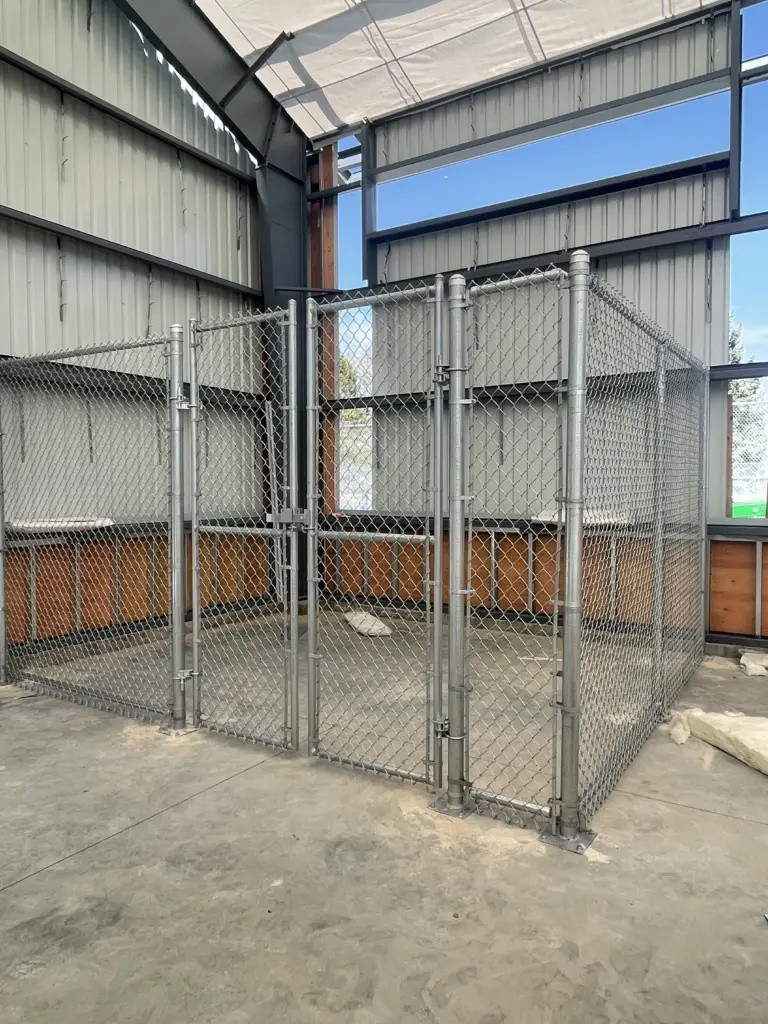
CENTRAL PARK, CO — Property owners, contractors, and event organizers in Central Park face wind conditions that create serious performance and safety challenges for temporary fence installations, and understanding those challenges is essential to making sound fencing decisions in the region.
Standard Fence Company, a fourth-generation family business with 87 years of experience serving Colorado, now offers wind-load consultations for temporary fencing in the Front Range, sharing expert insight into the wind-related risks that affect installations across the region and the practical measures that reduce those risks on active job sites and event grounds.
Colorado’s Wind Patterns Create Distinct Challenges for Temporary Fencing
Central Park and the broader Denver metro area experience sustained wind events driven by downslope flow from the Rocky Mountains, producing gusts capable of displacing or collapsing unsecured temporary fence panels without warning. Understanding fence regulations and zoning requirements in Central Park, Denver is equally important when planning temporary installations that must meet both safety and compliance standards. Unlike permanent fencing anchored into the ground, temporary systems rely on base supports, panel couplers, and ballast weight to maintain stability, and each component faces amplified stress during high-wind periods.
Wind pressure concentrates force at corners, gate openings, and points where panel alignment catches gusts rather than deflecting them. A single displaced panel in a construction site perimeter or public event boundary creates immediate liability exposure and compliance issues. Recognizing how wind behaves across a specific site layout allows installers to reinforce high-risk segments before a weather event tests the installation.
Base Support and Ballast Selection Directly Affect Wind Resistance
The base support system determines how much lateral force a temporary fence installation can absorb before panels shift or fall. Standard rubber or plastic bases require additional ballast weight in regions like Central Park where sustained wind events occur regularly. Adding water-filled ballast blocks and heavier commercial-grade bases increases the force required to displace panels during wind exposure.
Panel coupling hardware plays an equally critical role in maintaining fence line integrity under wind load. Loose or improperly seated couplers allow individual panels to separate from adjacent sections when lateral pressure builds, turning a single point of failure into a larger collapse. Using locking-style hardware rather than basic slip-fit connectors significantly improves temporary fence performance in Colorado’s wind-prone environment.
Site Layout Decisions That Reduce Wind Vulnerability
The orientation of a temporary fence line relative to prevailing wind direction determines how much surface area the installation presents to incoming gusts. Fence lines running perpendicular to dominant wind patterns face maximum load, while lines oriented at an angle distribute force more evenly across the panel structure. Site planners in Central Park who account for wind direction during the layout phase reduce reinforcement requirements from the outset.
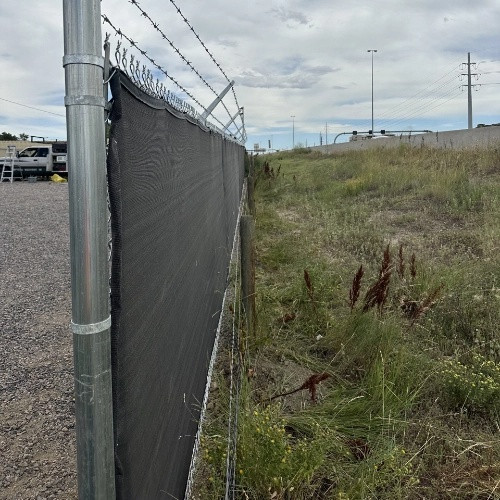
Where solid-panel coverage is not operationally required, introducing wind screen mesh with calculated porosity allows air to pass through rather than building pressure against the fence line. This approach maintains visual screening and site security while substantially lowering the wind load that base supports and couplers must resist during high-gust events common to the Front Range.
Inspection and Response Protocols Keep Temporary Fences Performing Safely
A consistent inspection schedule with our local team gives site managers the opportunity to identify and correct compromised connections before wind events expose those weaknesses. Checking base positions, coupler engagement, ballast placement, and panel alignment after each significant weather event ensures the installation maintains structural integrity throughout the project timeline.
Site personnel should also maintain a response plan for high-wind advisories that includes adding supplemental ballast, repositioning shifted panels, and temporarily removing wind screen mesh from the most exposed segments. Proactive responses to wind forecasts reduce both property damage and the risk of injury associated with displaced temporary fence panels on active construction sites and public gathering spaces.
About Standard Fence Company
Standard Fence Company is a fourth-generation family business serving Central Park, CO, and the greater Denver region with 87 years of experience and more than 20,000 completed projects. The company installs residential, commercial, and temporary fencing, provides gate consultation and design, gate operators and access control systems, custom iron railings, and custom masonry. Standard Fence Company offers affordable pricing and a limited lifetime warranty, backed by a longstanding commitment to quality across eight decades of Colorado service.
Property owners, contractors, and event organizers in Central Park seeking temporary fence consultation, site assessment, or installation services can contact Standard Fence Company at (303) 433-7301 to discuss project requirements, receive a professional estimate, and see how to get here.
Contact Information:
Standard Fence Company
1390 E 64th Ave
Denver, CO 80216
United States
Taylor Scavo
(303) 433-7301
https://www.standardfencecompany.com/